Brassware Finishes, Forms, and Decision-Making
No element of bathroom design communicates quality, or its absence, more immediately than brassware. A tap at a basin, a shower valve on a tiled wall, a floor-mounted bath filler: these are the points of contact between the occupant and the room, the first things the eye finds, and the pieces that determine the bathroom’s character more completely than any other single decision.
It follows that brassware deserves proportionally more of the design conversation than it typically receives. It is often specified last – hurried into the process when surfaces and joinery are already confirmed and that sequence almost always shows in the finished result. Brassware chosen in response to everything else rarely has the authority that brassware chosen as part of a coherent design vision does.
What follows is a reference for how to make the bathroom brassware decision easier.
Every brassware finish will read differently against different surfaces, varying light conditions, and in different design contexts. To specify correctly, it’s important to understand the relationships housed in the space it’ll sit within.
Polished Chrome is precise, reflective, and extremely versatile – at home in more contemporary, minimalist design schemes as well as more eclectic transitional interiors. Its maintenance requirement is relatively demanding (water marks and fingerprints are visible on a highly reflective surface), and in rooms with significant natural light, its brightness can become dominant rather than complementary.
Brushed Nickel sits between the reflectivity of polished chrome and the warmth of gold-toned finishes. Its cooler grey undertone suits bathrooms built on a palette of stone greys, slate, and poured concrete. It ages gracefully, is highly resistant to visible water marking, and works particularly well with frameless glass and minimal architectural profiles.
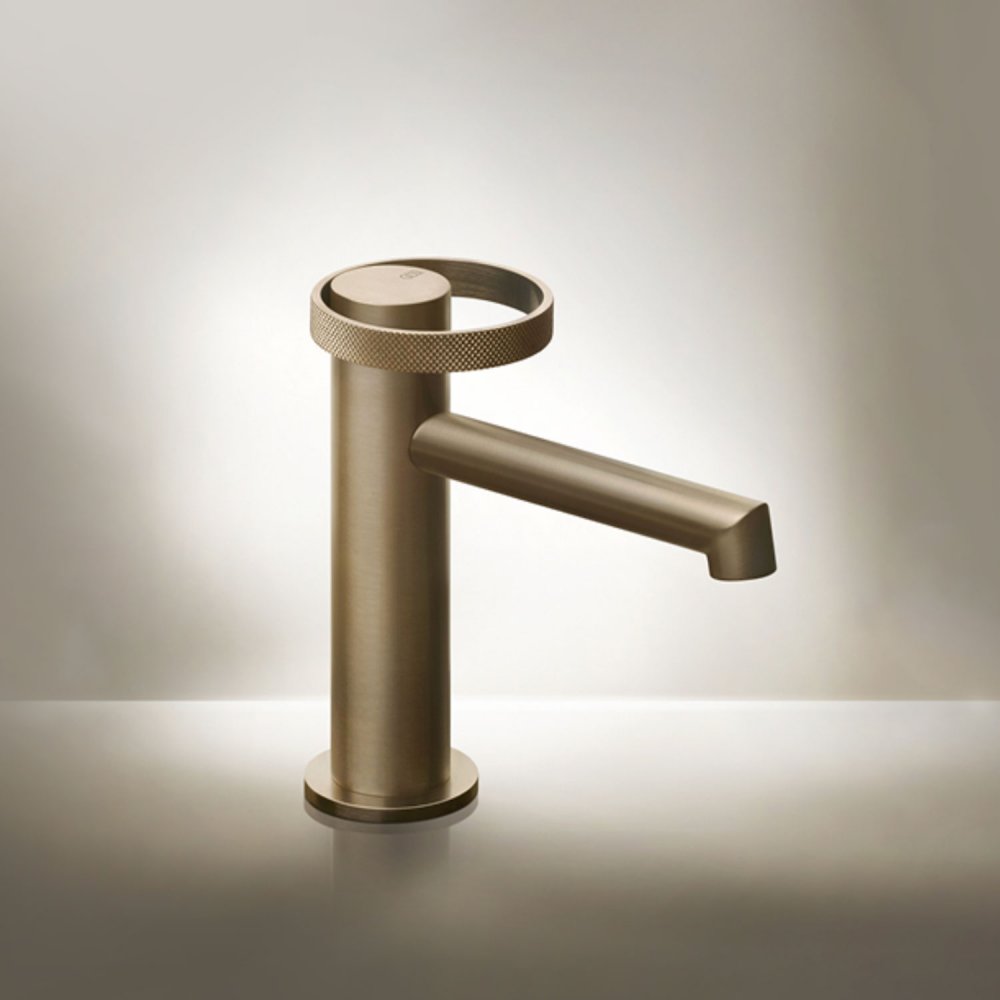
Brushed Brass / Satin Brass has established itself as a very popular finish and with good reason. Against natural stone, particularly limestone and warm-toned marble, brushed brass introduces a material warmth that brings a bathroom to life in ways that cooler finishes cannot. The critical quality distinction here is significant: the finest brushed brass brassware uses PVD coating – physical vapour deposition, which is far more durable and resistant to tarnishing than standard lacquer finishes. At this level, it is a finish that improves with careful use rather than degrading.
Unlacquered Brass is the most demanding and the most rewarding of the warm metal finishes. Unlike coated finishes, unlacquered brass patinates over time: the oils from hands, the minerals in water, and exposure to light work on the surface to create a finish that is literally unique to each installation and becomes more characterful with age. It is the finish of choice for clients who understand that the most distinguished objects often show their use.
Matte Black delivers a graphic authority that’s entirely unique in the category. Against white surfaces it’s stark and unambiguous; against stone it creates a tension that can be extraordinarily effective. It’s a finish that requires the courage of commitment: it must be applied consistently across a scheme; taps, showers, accessories, hardware, or the result is disjointed. When executed with consistency, a matte black bathroom is among the most resolved statements available in contemporary interiors.
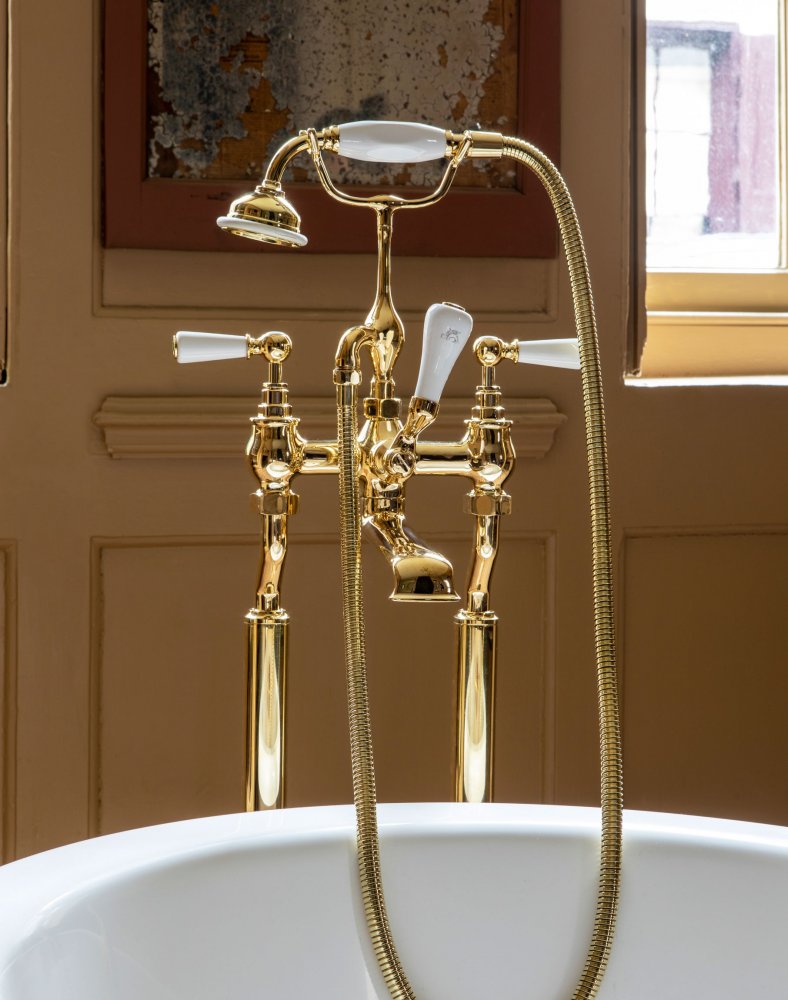
Polished Gold and Brushed Gold occupy the highest end of the finish spectrum. In the right context – substantial ceiling heights, significant natural light, materials of equivalent weight – gold brassware is not excessive but is right at home: an acknowledgement that the bathroom is a space of some importance. The distinction between polished and brushed gold is significant: polished reads as formal and historical; brushed reads as contemporary and considered.


The aesthetic language of a tap range, whether it reads as architectural, organic, industrial, or classical, should be consistent with the design language of the bathroom as a whole. A tap with geometric angularity, machined edges, and a precise profile belongs in a scheme of equivalent rigour. A tap with an organic, slightly softer profile – perhaps referencing natural form or mid-century design, belongs in a space of different character.
The finest European brassware manufacturers design their ranges as coherent families: the bath filler, the basin mixer, the shower valve, the accessories – all sharing a design language that allows them to coexist without competition. Mixing ranges from different manufacturers is possible, but requires a confidence in the compatibility of their respective aesthetics that is difficult to achieve without extensive experience of how products perform together.


Wall-mounted vs. deck-mounted is among the most impactful brassware decisions in any bathroom. Wall-mounted brassware – taps emerging from a tiled or stone wall plane above a basin – creates a clean, contemporary geometry and simplifies surface cleaning significantly. Deck-mounted taps on a vanity deck or bath surround have a more traditional, furniture-like quality. The right choice depends on the basin and vanity design, the visual weight of the wall plane, and the wider design language.
Thermostatic shower systems are the only specification worth considering in a bathroom designed to perform at the highest level. The precision of temperature control, the ability to programme preferred temperatures, and the safety advantages over manual mixing are all significant but the primary argument is experiential: a thermostatic shower that responds instantly and holds its temperature is a qualitatively different thing from one that requires constant adjustment.
Integrated versus exposed pipework is an architectural decision with brassware implications. In bathrooms where pipework is fully concealed within walls, only the brassware body is visible, which places significant demands on the quality and character of the exposed element. In bathrooms where exposed pipework is part of the design language (industrial, transitional, or classical schemes), the pipe itself becomes part of the specification.


The most successful approach is to mix within a tonal family – brushed brass and brushed gold, polished chrome and brushed nickel, or to use a contrasting finish very deliberately on a single element. What rarely works is mixing multiple contrasting finishes without a clear design rationale: the result reads as indecision rather than curation.
West One’s designers work with clients on brassware specification as an integrated part of the wider design process. The range we hold across our showrooms, which spans the finest manufacturers in Europe, allows for genuine comparison: products seen in situ, against the materials they will accompany, in natural and artificial light.
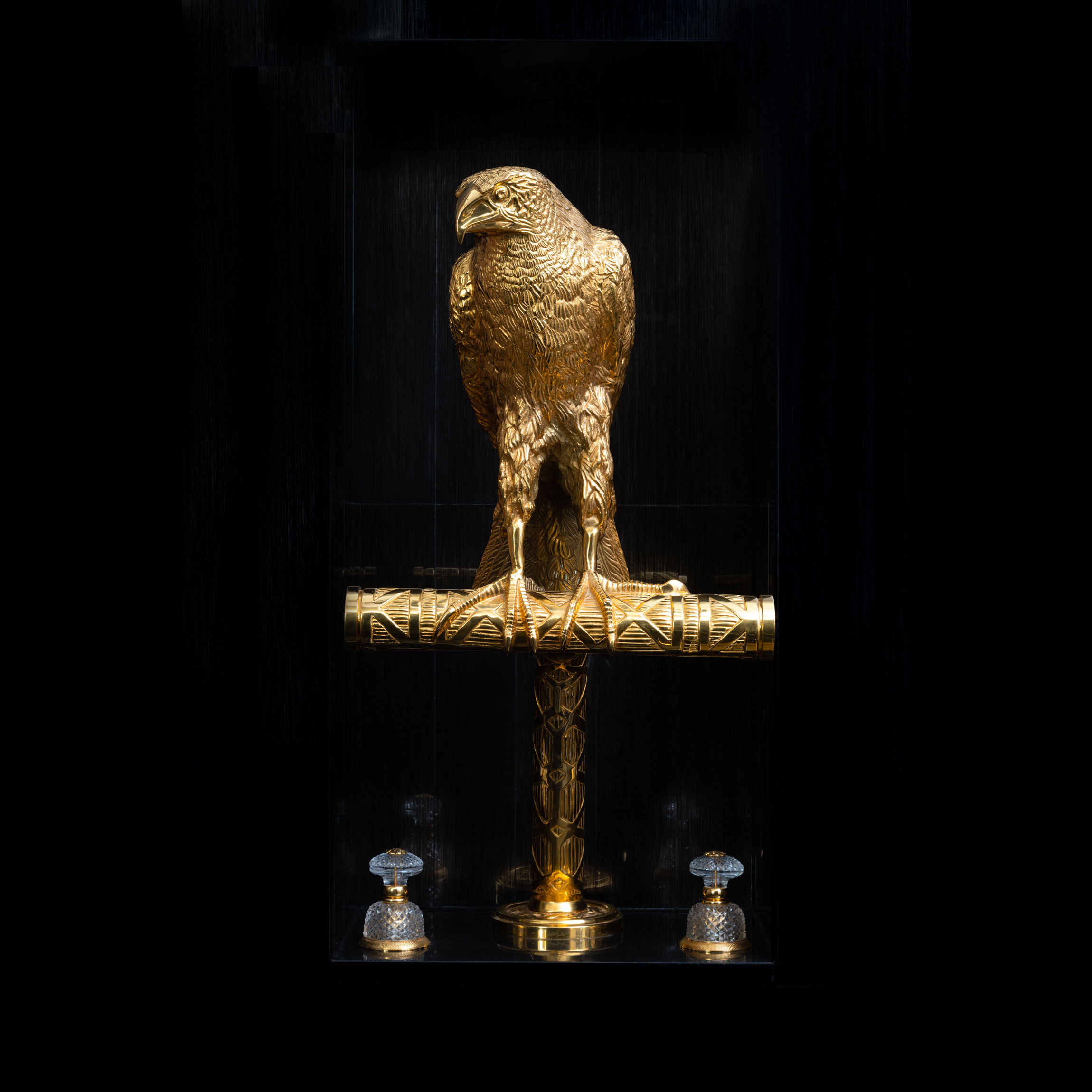

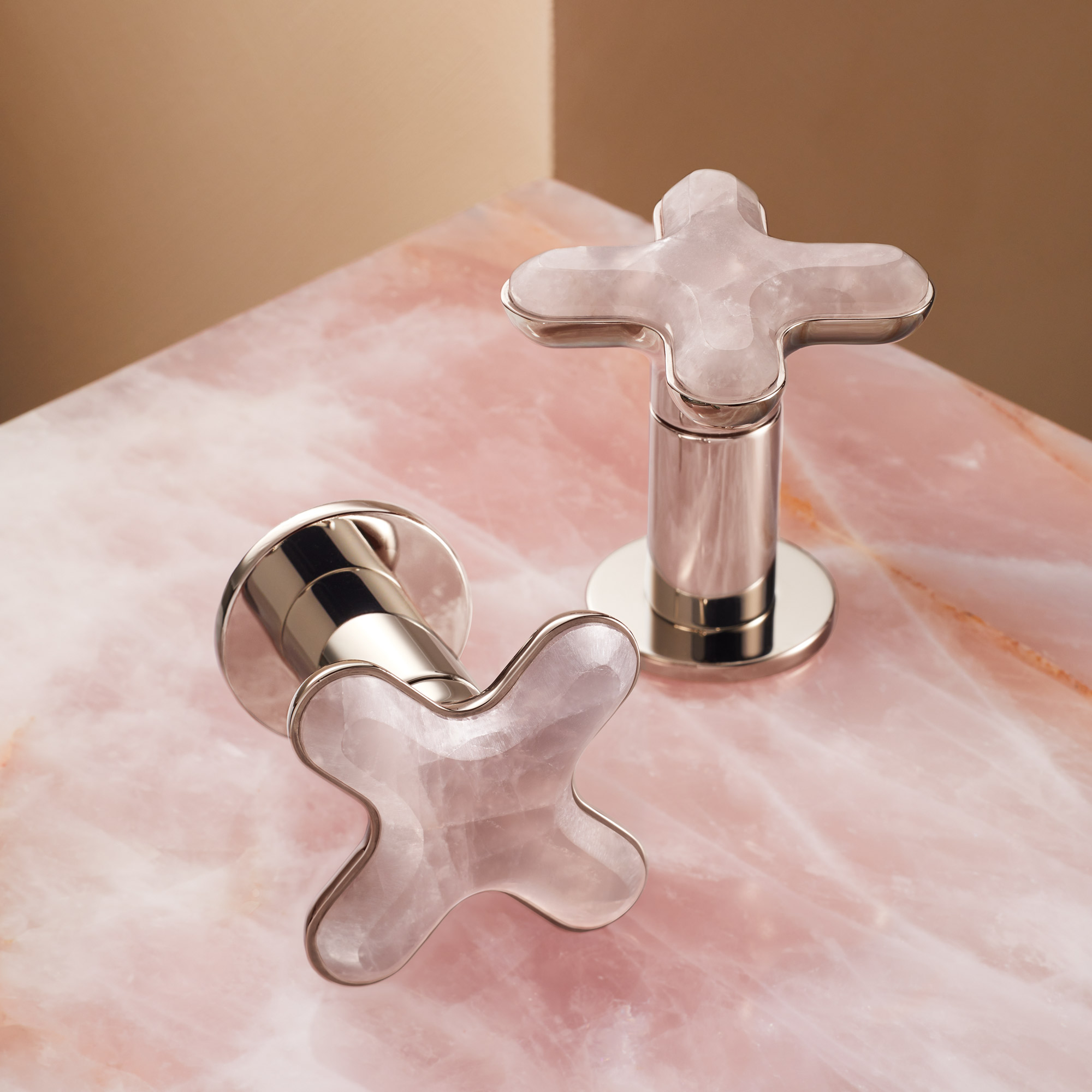
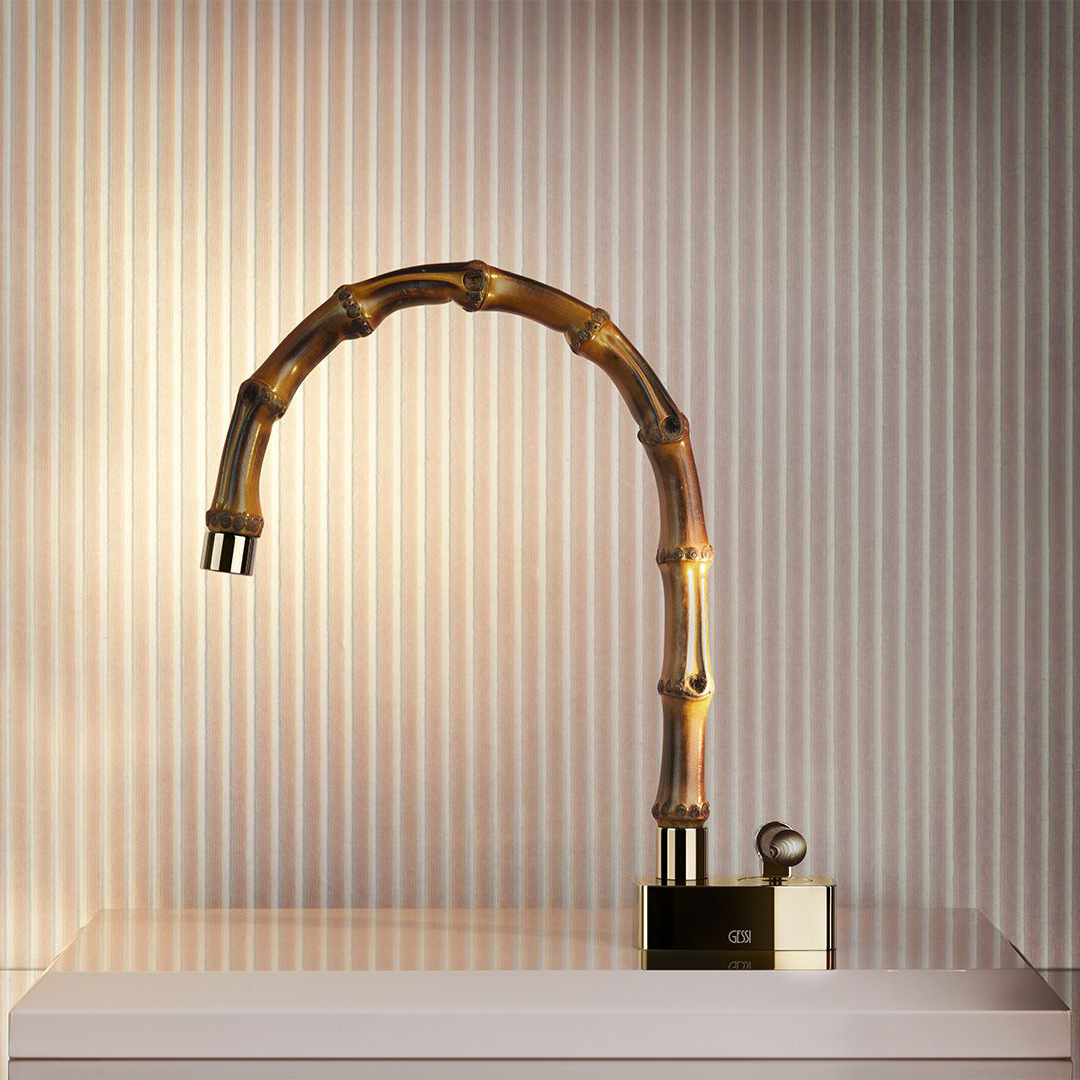
Restraint is the right default, but the manufacturers West One works with include pieces that argue for the opposite: brassware conceived as object first, where the specification decision is really a decision about confidence and scale. Le Faucon is the clearest case: a bath filler cast in solid brass and hand-gilded in 24 karat gold over forty hours, a sculptural falcon perched on driftwood, built for a single Mayfair display rather than a catalogue run. Trone’s Céleste makes its statement through architectural form rather than ornament: a basin mixer reinterpreted as a sweeping, hand-welded stainless steel centrepiece, its soft, curtain-like water flow doing as much design work as its silhouette. Kallista’s 002 Collection is quieter than either, its jewellery-inspired handles set with rose quartz, white Carrara or zebra jasper, organic and pill-shaped where the others are figurative or architectural.
None of them is trying to be versatile. Each belongs in one room and would look wrong in most others, and that’s by design: the space has to be built around the piece, not fitted to it.
West One’s design team works through brassware specification as part of the wider design process, not as a separate conversation bolted on at the end. If you’re weighing finishes, mixing ranges, or considering a statement piece for a specific room, our designers can help you get the decision right the first time.
Explore our brassware collection | Book a design consultation | Visit a showroom